Quick Answer
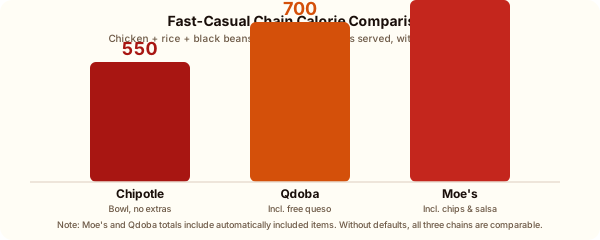
A standard chicken burrito bowl at Chipotle averages around 700 to 750 calories. Comparable orders at Qdoba and Moe's tend to run 50 to 150 calories higher due to different portion sizes and included toppings.
Mexican-inspired fast-casual restaurants have proliferated over the past decade, and Chipotle is often held up as the "healthy" choice. But is that reputation actually earned? How does Chipotle compare nutritionally to its closest competitors, Qdoba Mexican Eats and Moe's Southwest Grill?
This comparison focuses on three things that matter for health-conscious diners: calorie density, protein content, and ingredient practices.
The Apples-to-Apples Challenge
Direct comparison between these chains is tricky because they don't have identical menus. Qdoba offers queso included at no charge with entrees. Moe's includes chips and salsa with every order. These structural differences mean that "a burrito" at each chain is genuinely not the same product.
For this comparison, we'll look at the core entree only (no chips, no included extras), with the same filling combination: chicken, rice, black beans, pico de gallo, and lettuce.
Chipotle
Chicken bowl (no chips or extras):
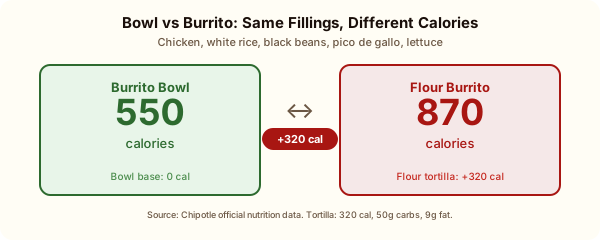
Chicken (180 cal) + White rice (210 cal) + Black beans (130 cal) + Pico (25 cal) + Lettuce (5 cal) = 550 calories
Chicken burrito:
Flour tortilla (320 cal) + Same fillings = 870 calories
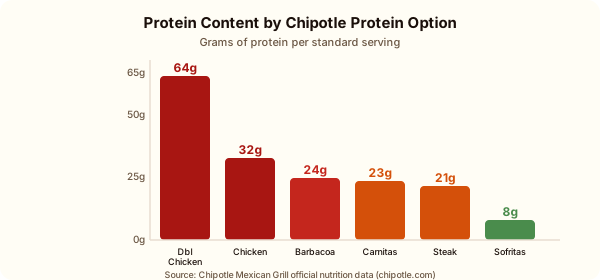
Chipotle's rice and bean portions are standardized and on the smaller side. The protein portions are controlled, with a standard chicken serving running roughly 4 oz (113g).
Qdoba
Qdoba's nutrition data (sourced from their official website) shows comparable calorie counts for similar orders, but with some differences:
A similar chicken bowl at Qdoba with rice, black beans, pico, and lettuce, including their signature queso, typically runs 700 to 800 calories, roughly 150 more than the equivalent Chipotle order.
Without the queso, Qdoba and Chipotle are remarkably similar in calorie count for comparable orders.
Moe's Southwest Grill
Moe's menu includes chips and salsa with every order, automatically adding 250 to 400 calories to every meal without a specific choice to add them. This is the biggest structural nutritional difference between Moe's and its competitors.
Moe's protein portions tend to be slightly larger than Chipotle's. A Moe's grilled chicken portion runs approximately 200 to 220 calories per serving, about 20 to 40 calories more than Chipotle.
A Moe's "Joey Bag of Donuts" burrito (their standard burrito) with chicken, rice, beans, pico, and lettuce runs approximately 900 to 1,000 calories before the included chips and salsa. With the included chips (approximately 310 cal), a standard Moe's meal hits 1,200 to 1,300 calories as automatically served.
This doesn't mean Moe's is worse. You can decline the chips and salsa, and a bowl-style order at Moe's is nutritionally comparable to Chipotle. But the default order significantly exceeds Chipotle's defaults.
Where Chipotle Has a Genuine Advantage
Calorie transparency. Chipotle was among the first major chains to proactively list calories on menus before FDA menu labeling rules went into effect in 2018. Their online nutrition tool (and third-party tools like ours) make it easy to build and check an order.
Consistent portions. Chipotle's portion sizes, while variable, are more consistent across locations than many competitors. This makes calorie estimation more reliable.
No automatic high-calorie additions. Chipotle doesn't automatically include chips, queso, or other add-ons. You choose everything you add, which makes it easier to control the final calorie count.
Where Chipotle Is Comparable
Protein quality. All three chains use real proteins (grilled or braised meat, not processed alternatives). Chicken at all three is a lean, high-protein option with similar calorie-to-protein ratios. The sourcing practices differ (Chipotle publishes specific information about antibiotic-free sourcing for their proteins), but from a pure nutrition standpoint, the proteins are comparable.
Sodium content. All three chains produce high-sodium meals. Chipotle's sodium counts run high, particularly in proteins (barbacoa: 540mg, chicken: 310mg) and tortillas (670mg). Qdoba and Moe's are similarly sodium-dense. If sodium is a concern, the strategy is the same at all three: limit salty toppings (queso, red salsa) and watch the tortilla.
The Practical Takeaway
If you're eating at any of these chains with calorie awareness:
Chipotle's genuine advantage is the combination of calorie transparency and no-default additions. But the nutritional difference between a smart order at Chipotle and a smart order at Qdoba or Moe's is small. The biggest factor in the healthiness of a fast-casual meal is what you order, not which chain you're at.
Use our [Chipotle calorie calculator](/chipotle-calorie-calculator) to check your specific Chipotle order. For a full reference on Chipotle's ingredient calories, see our [complete Chipotle nutrition facts guide](/blog/chipotle-nutrition-facts).